Instance Space Analysis for Algorithm Evaluation
ISA3: a 3-dimensional expansion of Instance Space Analysis
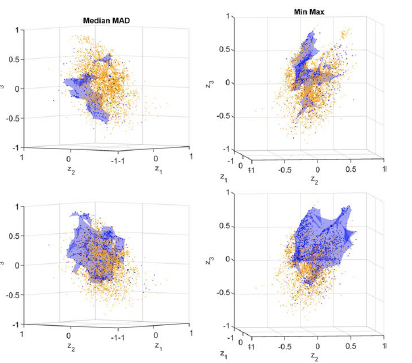
Authors: Connor Simpson, Mario Andrés Muñoz, Sevvandi Kandanaarachchi, Ricardo J. G. B. CampelloVenue: Machine Learning, 2025 TLDR: Moving Instance Space Analysis to 3D preserves more information and reveals clearer, previously hidden strengths of algorithms when evaluating diverse algorithm portfolios.
ISA3: a 3-dimensional expansion of instance space analysis
Benchmarking algorithm portfolio construction methods
Authors: Mario Andrés Muñoz, Hamed Soleimani, Sevvandi KandanaarachchiVenue: GECCO, 2022
TLDR: Smartly constructed algorithm portfolios reduce risk and outperform arbitrary ones, with some construction methods producing especially low‑risk yet differently robust portfolios.
Benchmarking algorithm portfolio construction methods
Algorithm portfolios combine multiple algorithms to reduce the risk of poor performance from any single choice. This work benchmarks five portfolio construction methods on standard ASLib scenarios, analysing how well they balance risk (unsolved instances) and robustness (reliance on a dominant algorithm). The results show that carefully constructed portfolios consistently outperform arbitrary ones, with two methods standing out for producing low‑risk portfolios with differing levels of robustness.
On normalization and algorithm selection for unsupervised outlier detection
Authors: Sevvandi Kandanaarachchi, Mario A Muñoz, Rob J Hyndman, Kate Smith-MilesVenue: Data Mining and Knowledge Discovery, 2020
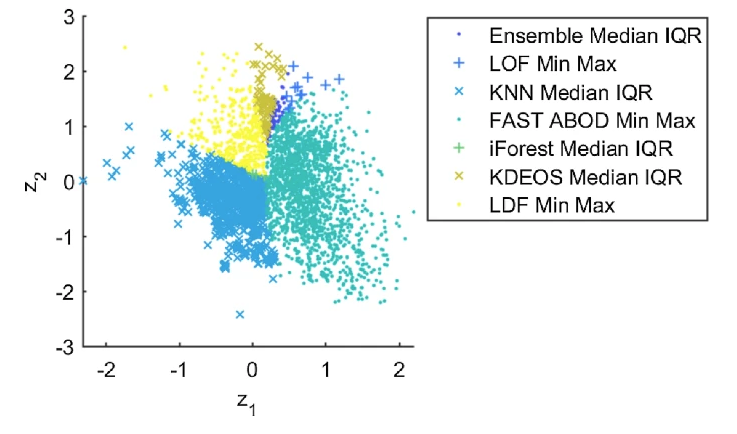
TLDR: Outlier detection performance depends heavily on both the dataset and how it’s normalised, and analysing these combinations helps identify the best method for each case.
On normalization and algorithm selection for unsupervised outlier detection
Instance Space Analysis for unsupervised outlier detection
Authors: Sevvandi Kandanaarachchi, Mario A Munoz, Kate Smith-MilesVenue: Evaluation and Experimental Design in Data Mining and Machine Learning, 2019
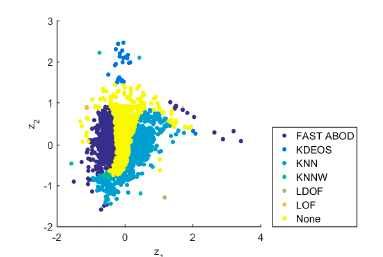
TLDR: By measuring key dataset properties, this work helps predict which unsupervised outlier detection method will perform best for a given problem.
References
- Smith-Miles, Kate, and Mario Andrés Muñoz. Instance space analysis for algorithm testing: Methodology and software tools, ACM Computing Surveys 55.12 (2023): 1-31.,